For millennia, humanity has gazed at the star-studded sky, seeking meaning, order, and a glimpse of what lies ahead. From ancient kings consulting court astrologers before wars to modern individuals checking their daily horoscope app, the allure of using celestial patterns to predict earthly events is timeless. This practice, known as astrology, posits a fundamental connection between the universe’s macrocosm and the microcosm of human life. However, this raises a profound and persistent question: Can astrology accurately predict the future, or is it merely a comforting narrative we project onto the impersonal cosmos?
This article delves deep into this inquiry, moving beyond simple yes or no answers. We will journey through astrology’s historical roots, understand its complex mechanisms, examine the powerful psychological reasons for its enduring appeal, and confront the rigorous scrutiny of the scientific method. Our exploration aims not to dismiss or blindly endorse, but to provide a comprehensive, nuanced perspective on one of humanity’s oldest practices. Whether you’re a skeptical observer or a curious believer, understanding the layers of this debate enriches our perception of how we seek certainty in an uncertain world.
The Ancient Roots and Mechanics of Astrological Prediction
To assess astrology’s predictive claims, we must first understand what it is and where it came from. Astrology is not a monolithic system; it’s a diverse collection of traditions with a core principle: celestial bodies—the Sun, Moon, planets, and stars—influence events on Earth and reflect the character, or destiny, of individuals and nations. This is distinct from astronomy, which is the scientific study of celestial objects and phenomena.
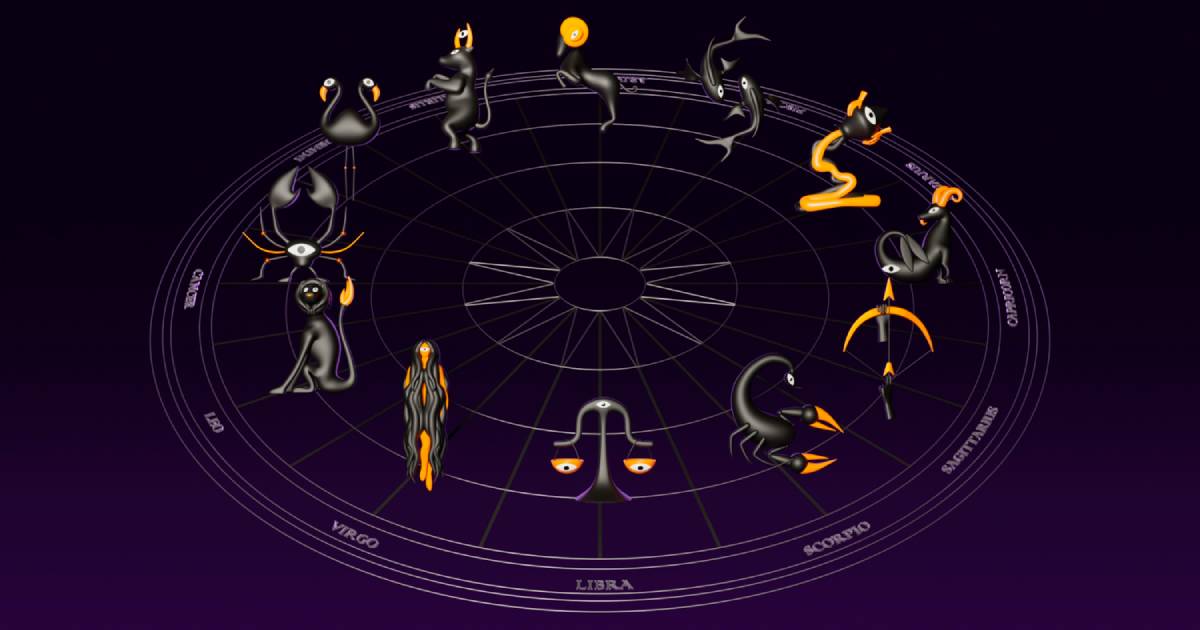
The system most familiar in the West, tropical astrology, has its origins in Mesopotamia around the 2nd millennium BCE and was later refined by the Greeks. It is based on the symbolic zodiac, a 12-part division of the sky aligned with the seasons. A central predictive tool is the natal chart (or birth chart), a celestial snapshot of the sky at the exact moment and location of a person’s birth. This chart, with its zodiac signs, planetary placements, and angular houses, is interpreted as a map of potentialities.
Predictions are generated through various techniques that track the ongoing movements of planets against this static birth chart. Key methods include transits (where planets in the sky form angles to natal planets), progressions (a symbolic advancing of the chart), and solar returns (a chart for the moment the Sun returns to its natal position each year). Astrologers synthesize these cycles to suggest periods of opportunity, challenge, or change in areas like career, relationships, or personal growth. The prediction is rarely a deterministic “this will happen,” but rather a forecast of prevailing energies and likely themes.
The Psychology Behind the Prediction: Why It Feels Real
Even if the stars aren’t sending coded messages, the experience of an accurate-seeming prediction is powerful and real for many. This can be largely explained by psychological phenomena. The most famous is the Barnum Effect (or Forer Effect), where individuals give high accuracy ratings to personality descriptions that are vague and general enough to apply to almost anyone. Horoscopes are masterfully crafted to leverage this effect, using statements that feel personal but are universally relatable.

Furthermore, confirmation bias plays a crucial role. We naturally notice and remember events that confirm our beliefs, while forgetting or dismissing those that do not. If a horoscope mentions a “surprise encounter,” we remember the unexpected call from an old friend and overlook the entirely ordinary day if no such encounter occurred. This selective memory reinforces the feeling of accuracy.
On a deeper level, astrology serves important cognitive and emotional functions. It provides a narrative framework for understanding life’s chaos, offering meaning during difficult times and hope during stagnant ones. The language of planetary cycles can normalize experiences, suggesting that a period of struggle (a “Saturn return”) is a necessary phase of maturation rather than a personal failure. In this sense, astrology’s predictive power may not be about forecasting external events, but about predicting and validating internal, human emotional journeys.
The Scientific and Skeptical Perspective
The scientific community overwhelmingly rejects astrology’s predictive claims. The primary criticisms are foundational. First, there is no known mechanism of action consistent with established physics. The gravitational, electromagnetic, or other influences from distant planets at the moment of birth are infinitesimally small compared to those from the nearby obstetrician or the hospital building. The force exerted by Mars on a newborn is vastly weaker than that exerted by a passing truck.
Second, numerous controlled empirical tests have failed to validate astrological predictions. Landmark studies, like the famous “Mars Effect” test by Michel Gauquelin and its subsequent replications and criticisms, have produced inconsistent and non-compelling results. When astrologers are asked to match birth charts to personality profiles or predict life events under double-blind conditions, their results typically do not exceed chance expectation.
Scientists also point to the issue of the precession of the equinoxes. The Earth’s wobble on its axis has shifted the constellations relative to the zodiac signs over the past 2,000 years. This means the Sun is now in a different constellation for most of its “astrological sign” period (e.g., when astrology says the Sun is in Aries, it’s actually in Pisces). Most Western astrology ignores this shift, which skeptics argue invalidates its basic framework. From this viewpoint, astrology is seen as a pseudoscience—a system that uses the trappings of science (charts, diagrams, complex rules) but fails to adhere to the scientific method of testability, falsifiability, and consistency with existing knowledge.
Finding a Middle Ground: Astrology as a Tool, Not a Truth
A Lens for Reflection, Not a Crystal Ball
Many modern practitioners and enthusiasts navigate a middle path. They may not believe Jupiter’s position literally causes a job promotion, but they find value in astrology as a symbolic language and a tool for introspection. In this view, the birth chart is not a predestined script but a map of inherent potentials, strengths, and challenges—a cosmic personality inventory. Predictions become less about foretelling specific events and more about identifying auspicious or challenging periods for certain types of action.
This approach treats astrology similarly to other interpretative frameworks like psychology or philosophy. It can be a powerful catalyst for self-inquiry, helping individuals consider life paths, relationship dynamics, and personal timing they might have otherwise ignored. The predictive element transforms from “What will happen to me?” to “Given these potential energies, what is the most conscious and proactive choice I can make?” This shifts the power from the stars back to the individual, using astrology as a guide for mindful living rather than a decree of fate.
Ethical Considerations in Predictive Astrology
This nuanced view raises important ethical questions. Responsible astrologers emphasize free will, possibility, and empowerment. They avoid making frightening, deterministic predictions about health, death, or disaster, understanding the profound psychological impact such statements can have. The goal becomes coaching and counseling, using the chart as a starting point for dialogue, rather than delivering a fixed prophetic message. The ethical practitioner acknowledges the limits of their craft and encourages clients to use astrological insights as one piece of their decision-making puzzle, alongside practical considerations and personal intuition.
Conclusion: The Verdict on Astrology’s Predictive Power
So, can astrology predict the future? The answer depends entirely on the definition of “predict.” If by prediction we mean forecasting specific, concrete events (like the date you will meet a soulmate or the stock market will crash) through a causal influence of celestial bodies, then the evidence strongly suggests it cannot. The scientific arguments against such a mechanism are robust, and empirical validations are lacking.
However, if we view prediction as identifying archetypal patterns, psychological tendencies, and cycles of personal growth, then astrology offers a rich, centuries-old system that many find remarkably insightful. Its power lies not in astrophysics but in human psychology, narrative, and the profound need to find order and meaning. It predicts the internal weather of the human soul more reliably than the external events of the world.
Ultimately, astrology persists because it speaks to something fundamental in the human experience. Whether approached with belief, skepticism, or curious ambivalence, it challenges us to consider our place in a vast universe. Perhaps the most valuable prediction astrology offers is this: that by reflecting on our lives through its symbolic lens, we might come to know ourselves—and navigate our future—with a little more wisdom, intention, and grace.